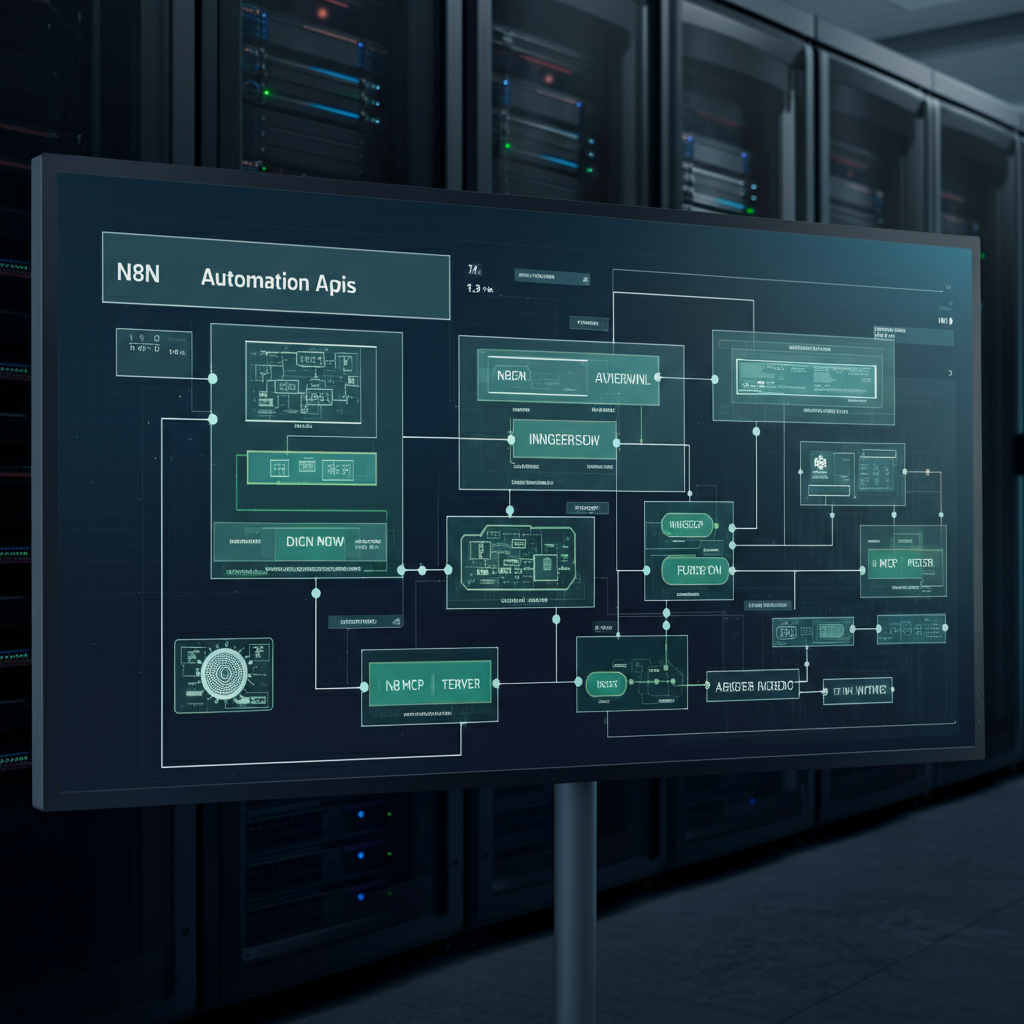
10 Best Automation Apis for Resilient N8n Mcp Server Integration
- Select reliable automation APIs to enhance n8n integration.
- Assess API documentation for clarity and support resources.
- Implement authentication methods for secure connections.
- Integrate APIs with n8n workflows for seamless automation.
- Monitor performance metrics to ensure optimal operation.
- Review and optimise workflows regularly for efficiency.
- Test integrations thoroughly to reduce downtime.
- Document processes to ensure team alignment and knowledge sharing.
Understanding Automation Apis for n8n MCP Integration
What Makes an API Resilient?
Automation apis are the backbone of connectivity in the modern automation landscape, providing structured interfaces for diverse applications and services to communicate. In the context of n8n MCP server integration, a resilient API must offer consistent uptime, reliable data transfer, and robust error recovery mechanisms. Many enterprise systems now rely on integration interfaces because of their ability to adapt quickly to changing workflows, scale with demand, and provide the flexibility necessary for custom process automation. These attributes ensure organisations remain agile and competitive. For developers, understanding the technical foundations—such as rate limits, authentication protocols, and endpoint stability—is crucial. Not only do these elements safeguard data but they also enable continuous workflow execution, a necessity for mission-critical infrastructure. Selecting the right APIs within API integration best practices strategic automation architectures therefore drives both operational reliability and long-term scalability.
Which automation APIs work best with n8n MCP?
The best automation APIs for n8n MCP include popular choices like Slack, GitHub, and Trello. These APIs provide seamless integration and enhance workflow efficiency. Choosing the right automation APIs allows for better connectivity and optimises your business processes.
How can I make my n8n workflows more resilient?
You can make your n8n workflows more resilient by implementing error handling and using retries for actions. Additionally, creating backup plans ensures that workflows can recover from failures quickly. This approach enhances reliability and maintains efficiency in your automation processes.
Top Criteria for Selecting Automation Apis
Reliability, Scalability, and Flexibility
When evaluating programmable connectors for resilient n8n MCP workflows, three primary factors must be prioritised: reliability, scalability, and flexibility. Firstly, reliability is essential, ensuring minimal downtime and uninterrupted process execution. This can be measured through clear Service Level Agreements (SLAs), extensive uptime records, and active incident monitoring. Secondly, scalability allows digital integration endpoints to handle sudden growth—be it an increased volume of data or complex, multilayered workflows. Flexibility is vital as businesses frequently evolve, and API links must adapt to accommodate new endpoints, logic, or compliance requirements. Security standards—such as OAuth2, TLS encryption, and regular vulnerability assessments—must also underpin every integration. Finally, it’s important to consider documentation quality and ongoing support, as well-maintained APIs with vibrant communities enable faster troubleshooting and integration. For a comprehensive review of best practices, refer to explore Google's robust automation APIs.
What is the easiest way to automate with APIs in n8n?
The easiest way to automate with APIs in n8n involves using pre-built nodes for popular services. This user-friendly interface allows you to connect applications with minimal coding. Consequently, you can streamline your workflows quickly, maximising productivity and effectiveness.
Are there any reliable API integration tools for n8n?
Yes, there are several reliable API integration tools for n8n, such as Make and Zapier. These tools enable users to connect various applications smoothly, enhancing automation capabilities. Furthermore, integrating these tools can significantly streamline your operations, improving overall performance.
Automation Apis: Benefits for Workflow Automation
Reducing Downtime and Enhancing Performance
Programmable automation connectors can transform the efficiency of workflow automation, dramatically reducing manual intervention, errors, and process latency. One of the standout benefits is the reduction in downtime due to automated, real-time error handling. Robust interface solutions help ensure tasks move seamlessly from one system to another, mitigating the impact of outages or failed jobs. Furthermore, modern APIs often include built-in monitoring and alerting—giving IT teams instant feedback and the ability to proactively address issues. Performance gains are also significant: service endpoints can batch requests, trigger parallel workflows, and cache data for faster task completion. This leads to increased productivity and allows teams to focus on higher-value activities. For those seeking guidance on maximising these benefits, relevant insights are available at resilient n8n MCP workflow.
When should I consider using multiple automation APIs?
You should consider using multiple automation APIs when your workflows demand integration across various applications. This approach enables you to leverage specific features from different tools, ensuring flexibility. By diversifying your automation APIs, you can achieve greater efficiency and functionality in your projects.
Why is it important to choose the right automation APIs?
Choosing the right automation APIs is important because it directly affects your workflow efficiency and performance. The appropriate APIs will ensure that your applications communicate effectively and reliably. Consequently, optimising your selection can lead to smoother operations and increased productivity across your organisation.
10 Best Automation Apis for n8n MCP Server Integration
Overview of Leading Solutions
Choosing the right orchestration endpoints for n8n MCP server integration begins with understanding which providers deliver the highest levels of reliability and integration support. Leading solutions such as Zapier, Microsoft Power Automate, and Make (Integromat) offer expansive connectivity, advanced error handling, and community-driven support. Custom APIs from cloud platforms like AWS Lambda and Azure Functions also stand out for their scalability and security. Other notable contenders include Tray.io, Workato, and UiPath for enterprise-grade robustness. For open-source enthusiasts, n8n’s native API abilities and Node-RED present flexible, developer-friendly alternatives. Each solution offers a unique blend of features, such as comprehensive logging, custom scripting, and granular permission settings. Detailed comparisons and reviews of these top automation platforms can be found at integrate n8n with leading platforms, ensuring users select the best fit for their use case and growth trajectory.
API Integration Challenges and Solutions
Common Pitfalls and How to Overcome Them
API integration with n8n MCP servers presents several challenges, from incompatible data formats to authentication mismatches. One prevalent issue is inconsistent API standards, where endpoints may differ in naming conventions or error codes. To address these, develop a middleware layer that normalises requests and responses, and use schema validation tools to pre-empt compatibility errors. Another challenge involves managing rate limits and preventing service bans—automatic backoff and retry logic are vital here. Security gaps, such as weak authentication, can be mitigated by enforcing strong token management and regular credential rotation. Documentation discrepancies often impede developers, so comprehensive, up-to-date technical references are key. By anticipating these pitfalls and adopting a structured, documented integration approach, organisations minimise disruptions and maintain stable, secure automations.

Ensuring Workflow Reliability with Automation Apis
Error Handling and Retry Logic
Reliability in integration APIs hinges on sophisticated error handling and robust retry mechanisms. Designing idempotent workflows—processes that can safely be retried without unwanted side effects—greatly reduces data duplication risks. Furthermore, structured logging and alerting ensure teams can detect failures in real time and respond quickly. Automation platforms like n8n allow users to define granular error responses, from simple retries to more complex circuit breaker patterns. For workflows under heavy utilisation, staggered retries with exponential backoff prevent overwhelming API endpoints and reduce cascading failures. Additionally, leveraging built-in monitoring dashboards ensures ongoing visibility into operational health. This layered approach ensures not only resilience but also auditability, core tenets for regulated industries or critical infrastructure use cases.
Scalable API Workflows for Growing Businesses
Future-Proofing Automation
As businesses scale, their reliance on resilient digital connectors becomes even more pronounced. The ideal automation solution should support orchestration across tens, if not hundreds, of disparate services, handling increases in data volume and workflow complexity without bottlenecking. To future-proof such workflows, ensure integrations selected offer modular expansion, API versioning, and horizontal scalability. Leveraging containerisation (via Kubernetes or Docker) in tandem with workflow APIs can optimise resource allocation and enable rapid deployment of new automations. Advanced use of webhooks and event-driven triggers allows workflows to adapt dynamically to business changes. Regularly reviewing API usage patterns and upgrading endpoints also keeps automations in line with emerging requirements and security standards.
Integrating n8n with MCP Server: Best Practices
Configuration and Security Tips
Configuration is critical to a successful integration between n8n and MCP servers. Always map out process flows before implementation, clearly defining data sources, triggers, and expected outcomes. Segregate sensitive process logic and ensure secrets are stored using environment variables or secure vault services. When connecting workflow interfaces, strictly use secure channels (TLS/SSL) and implement role-based access control for each integration. Monitor for anomalous activity and enable detailed access logging. For ongoing maintenance, leverage automated update checks and dependency management tools to ensure you are running secure and optimal versions across both n8n and the integrated APIs. Additionally, regularly back up workflow configurations to safeguard against accidental changes or data loss.
Community Insights: UK Deployments and Experiences
Lessons Learned from Real-World Use
Organisations across the UK have shared invaluable insights from deploying process connectors with n8n MCP servers. Common themes include the importance of pilot testing new integrations, involving business stakeholders early, and investing in API monitoring from day one. In highly regulated sectors such as finance and healthcare, practitioners emphasise the necessity of data encryption and compliance auditing. Many UK-based teams report that leveraging open-source automation endpoints enables greater customisation and rapid response to shifting market requirements. Furthermore, peer-to-peer community forums have proved essential for troubleshooting and sharing best practices. Learning from these collective experiences can significantly accelerate a successful, secure roll-out in your own environment.
Frequently Asked Questions About Automation Apis
Expert Answers for n8n Users
Q: What are the biggest pitfalls when integrating automation apis with n8n MCP servers?
A: The main risks include poorly documented endpoints, mismatched data structures, and unsecured authentication mechanisms. Careful pre-integration analysis and robust error handling are vital.
Q: How do you ensure automation apis remain future-proof?
A: Choose APIs with strong documentation, versioning guarantees, and active support communities. Monitoring industry trends and participating in automation forums help keep your workflows adaptable.
Q: Can legacy systems be integrated through automation apis?
A: Yes, although additional middleware or adapters might be required for older systems lacking direct API support. Many integration platforms provide tools to bridge these gaps effectively.
“Adopting resilient automation APIs and robust workflow practices is the cornerstone of scalable n8n MCP server automation.”
Conclusion: Elevate Your n8n Automation with the Right APIs
In summary, robust digital automation apis form the foundation of dependable n8n MCP server integrations. By selecting APIs that are reliable, scalable, and well-supported, organisations empower themselves to automate with confidence while accommodating future innovations. Adopting best practices for security, monitoring, and error handling will ensure your automations remain resilient as your requirements evolve. Whether deploying in a small business or a large enterprise, investing in the right programmable integration now protects your operations against tomorrow’s challenges and enables you to realise maximum value from your automation initiatives.
Great guide on 10 best automation apis for resilient n8n MCP server integration — Community Feedback
How do I integrate APIs with n8n and AI workflows?
To integrate APIs with n8n and AI workflows, use automation APIs that support secure authentication and flexible endpoints. Connect these APIs to n8n nodes to automate tasks, enhance data flows, and drive AI-driven processes with improved resilience and scalability throughout your automation apis stack.
How can I automate workflows in n8n reliably?
Reliable workflow automation in n8n is achieved by choosing automation apis with robust error handling, retry logic, and MCP server compatibility. Use tested integrations and validate your configuration to ensure uninterrupted, scalable automation across your interconnected systems.
In This Article
- Automation apis underpin secure, reliable workflow integration for n8n MCP servers.
- Select APIs based on reliability, scalability, flexibility, and quality of support.
- Robust error handling and retry logic minimise downtime and data loss.
- Future-proofing requires modular, scalable APIs with active developer communities.
- Strict security and configuration protocols optimise integration resilience.
- Real-world UK deployments highlight community support and compliance focus.
- Continuous monitoring and adaptation keep automation workflows robust and current.